What makes these projects important is not only the reduced environmental impact, but also the way they demonstrate practical engineering strategies that significantly cut operational energy use. Many of these strategies can be applied broadly across new builds, refurbishments, and major upgrades.
This article summarises several notable Gold Coast projects and the key energy-efficiency principles they rely on.
Cornerblock (Arundel): Passive House Principles in a Commercial Context
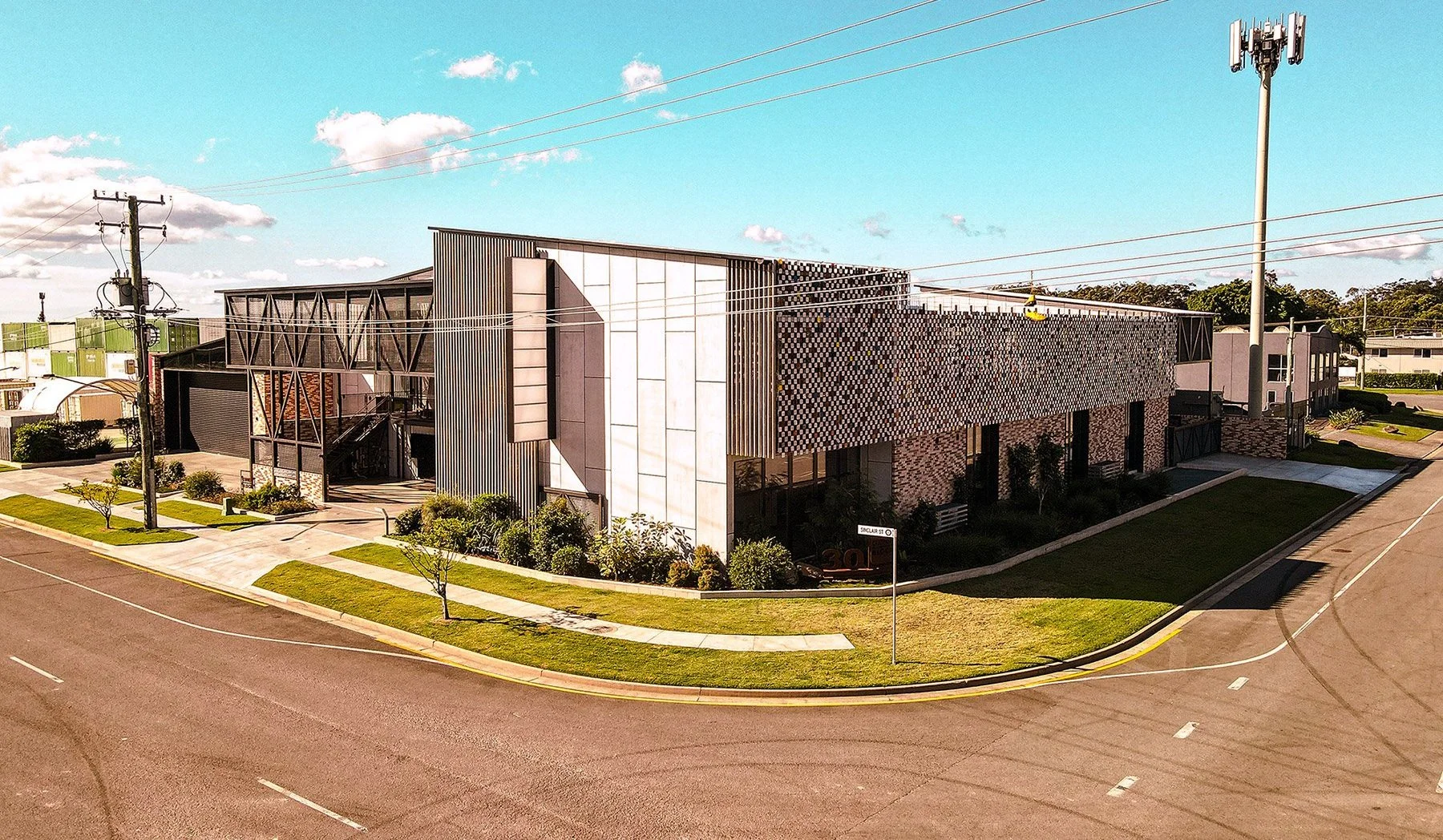
Cornerblock is one of the most technically interesting commercial buildings on the Gold Coast due to its attempt to align with Passive House, Green Star, and WELL simultaneously.
Building Envelope and Thermal Design
Cornerblock’s design uses Passive House fundamentals:
- Highly insulated, airtight structure
- Double-glazed windows with external shading
- Careful thermal bridging control
- Mechanical heat-recovery ventilation
The objective is to maintain internal temperatures with minimal reliance on mechanical cooling or heating. A well-sealed, thermally stable envelope also provides acoustic stability, which is relevant in Queensland’s humid environment where outside noise and heat fluctuate significantly.
Electrical and Mechanical Systems
The building integrates:
- A 30 kW rooftop solar array, planned to scale to 160 kW
- LED lighting throughout
- Occupancy and daylight sensors
- A tunable circadian lighting system
- Energy-recovery ventilation systems (ERV)
These systems work together to reduce consumption during peak periods and lower total building energy demand. Feedback from early tenants indicates a measurable reduction in cooling loads due to the passive design.
Cornerblock illustrates what happens when insulation, glazing, ventilation, and electrical systems are planned as a combined system rather than separate components.
Lumina Precinct (Southport): High-Performance Research and Education Buildings
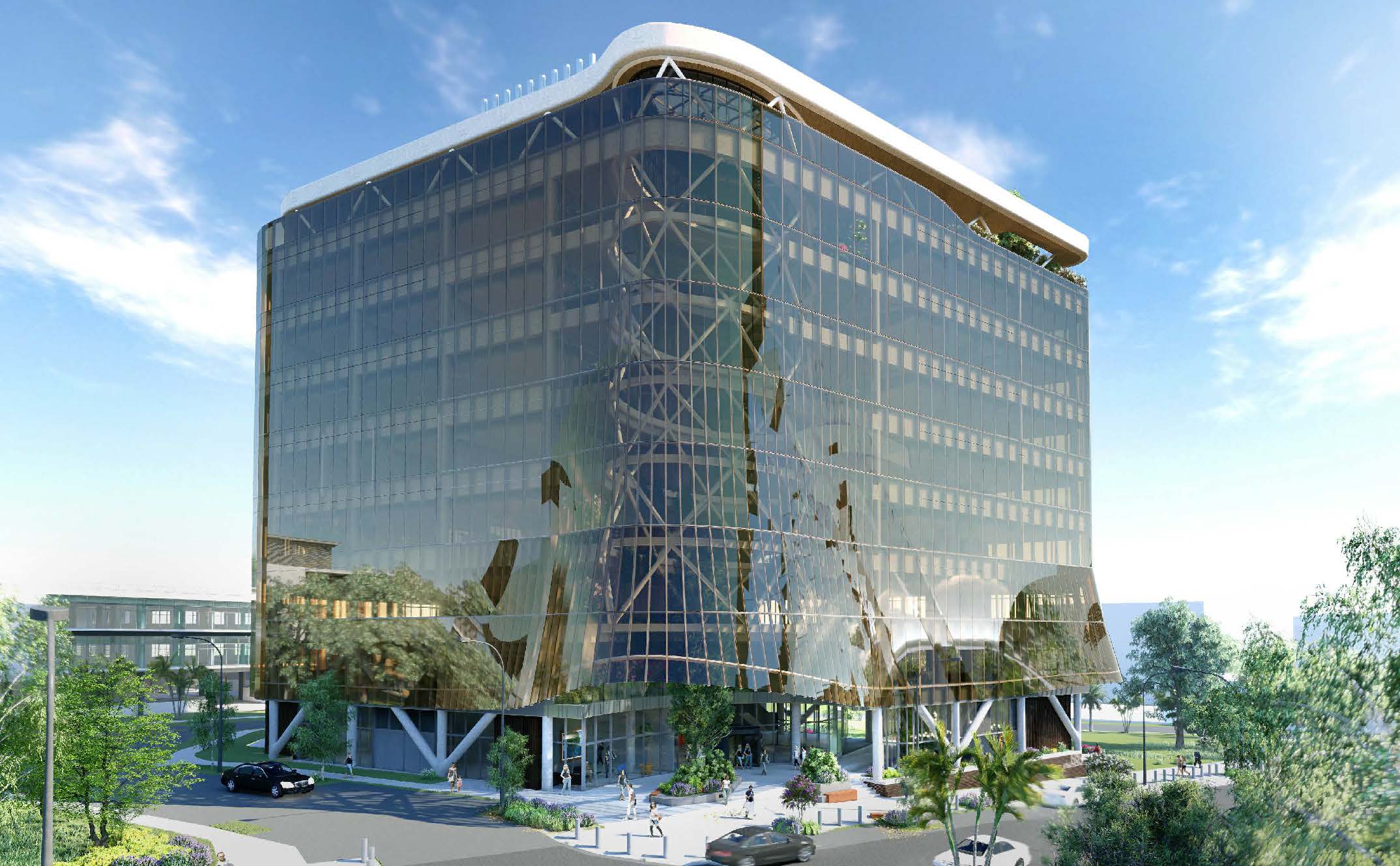
The Lumina precinct within the Gold Coast Health & Knowledge Precinct includes several developments designed around strict energy performance criteria. Two examples highlight current trends.
RDX – All-Electric, High-Rating Laboratory and Office Building
RDX (under construction, due 2025) is targeting a 6-Star Green Star rating.
Key design elements:
- Fully electric building, avoiding on-site gas
- Heat pump systems for heating and hot water
- Solar and renewable-readiness
- EV-ready parking infrastructure
- High-performance façade intended to maximise natural light while controlling heat gain
Buildings of this type require extensive metering, load-diversity planning, and integration between mechanical, electrical, and façade engineering to meet rating requirements.
Proxima – Designed for 5-Star NABERS Energy
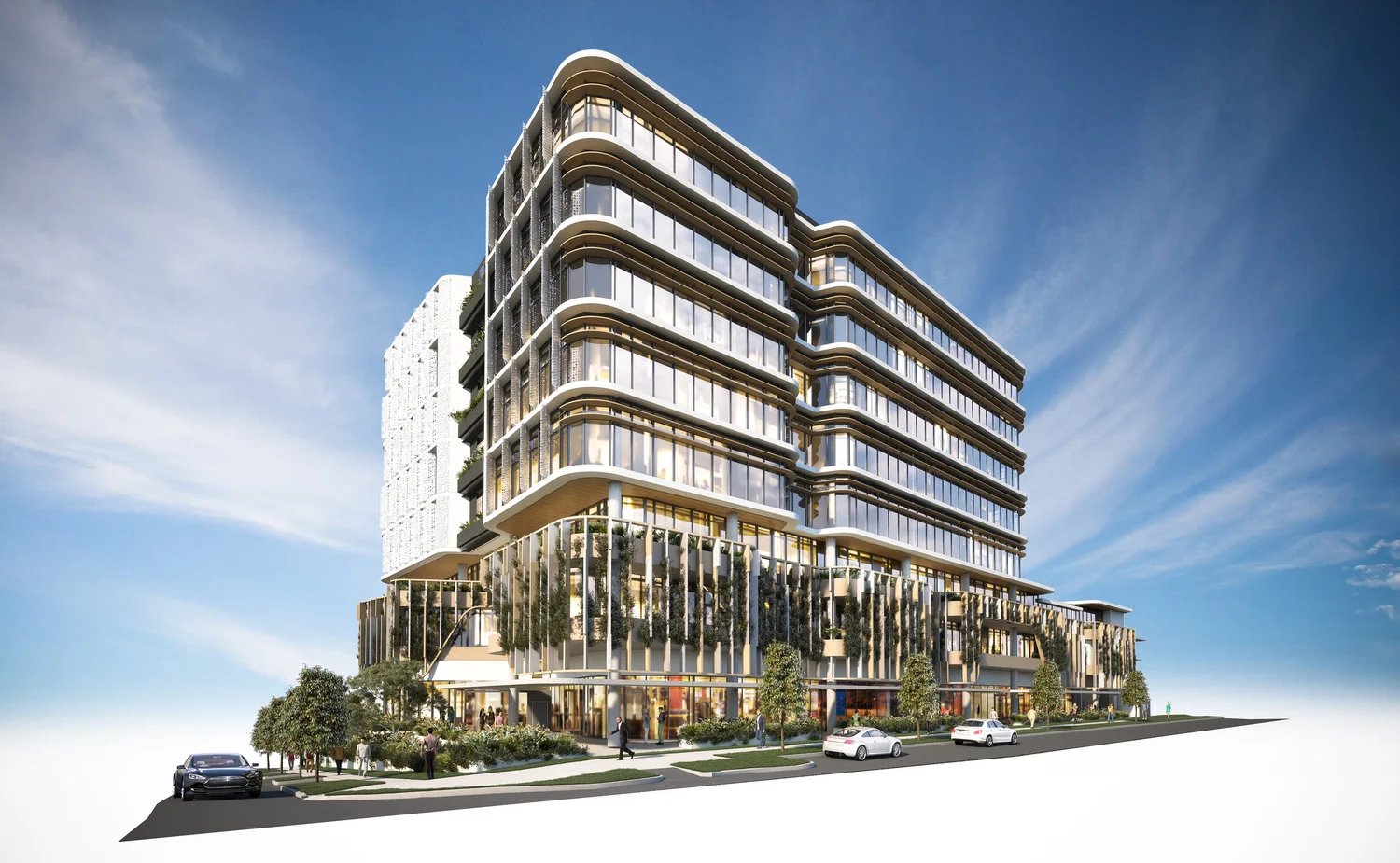
Proxima is a seven-level medical and education-oriented commercial building. It has been engineered with a target of 5 Stars under NABERS Energy, meaning its operational energy use must be significantly lower than typical new office stock.
Likely design characteristics include:
- High-efficiency HVAC plant
- Fine-grain zoning and demand-controlled ventilation
- LED lighting with daylight/occupancy controls
- A façade engineered to reduce cooling loads
- Integrated metering to support NABERS monitoring
Proxima illustrates how mid-size commercial buildings on the Gold Coast are now designed with operational energy targets from the outset, rather than being evaluated only after completion.
Public Sector Examples: Parklands and Pimpama
Public infrastructure projects on the Gold Coast also demonstrate large-scale energy efficiency applications.
Parklands / Smith Collective – 6-Star Green Star Community
The Parklands redevelopment achieved the highest Green Star Communities rating. Although primarily residential, the precinct demonstrates:
- Climate-responsive layout
- Energy-efficient building stock
- Precinct-level planning for low operational energy use
The project shows how broader urban design strategies influence the energy demands of individual buildings.
Pimpama Sports Hub – Solar, Storage, and Co-Generation
The Pimpama Sports Hub integrates several large-scale energy systems:
- ~910 kW of solar PV
- ~316 kWh of battery storage
- A co-generation plant producing electricity and using waste heat to warm pools
- Rainwater harvesting systems
This project is relevant because it demonstrates how different energy systems can interact in a complex facility with large and variable electrical loads, particularly cooling and pumping loads.
It also shows the operational impact of combining solar, battery storage, and heat-recovery systems in a real-world setting.
Common Engineering Strategies Across These Buildings
While the projects differ in purpose and size, several consistent design patterns appear. These strategies now define modern energy-efficient commercial construction on the Gold Coast.
1. On-Site Solar and Provision for Expansion
Most major new builds include solar PV systems designed with:
- Load analysis
- Inverter placement
- Switchboard integration
- Structural allowances for scaling
Even when full systems are not installed initially, provisions are commonly built into the electrical distribution.
2. High-Performance Building Envelopes
A thermally stable envelope directly reduces electrical demand because:
- HVAC equipment can be smaller
- Peak demand charges are reduced
- Control systems run more efficiently
This is especially relevant in the Gold Coast climate, where cooling dominates energy use.
3. Heat Pumps and Electrified HVAC
Heat-pump technologies are replacing older resistive or gas options for:
- Space heating
- Hot water
- Pool heating (in some public facilities)
Because heat pumps leverage ambient energy, they can reduce electrical consumption compared to traditional systems, despite being electrically powered.
4. Intelligent Lighting Systems
All major projects reviewed use:
- LED lighting
- Occupancy sensing
- Daylight harvesting
- Time-based controls
These systems minimise unnecessary runtime and allow lighting to respond dynamically to conditions.
5. Regenerative and High-Efficiency Auxiliary Systems
Examples include:
- Regenerative drive elevators
- High-efficiency motors and pumps
- Pool filtration optimised for energy
- VSD-driven mechanical systems
These measures reduce both energy use and mechanical wear.
6. Continuous Monitoring and Data-Based Optimisation
This is increasingly standard:
- Building Management Systems (BMS)
- Sub-metering by tenancy or load type
- Circuit-level consumption data
- Alerts for unusual usage
Performance ratings such as NABERS depend on ongoing building tuning, not just design intent.
7. Complementary Sustainability Features
Many projects combine energy measures with others that indirectly support efficiency:
- Rainwater harvesting (reducing pumping energy)
- Low-VOC materials (supporting WELL performance)
- Urban design choices that reduce transport emissions
While these are not electrical systems, they contribute to overall sustainability outcomes.
Why These Projects Matter to the Broader Gold Coast Construction Landscape
The projects discussed above show several clear trends:
- Energy efficiency is becoming a core design driver in Gold Coast commercial developments.
- Integrated design—where architecture, mechanical engineering, and electrical systems are considered as a whole—is now essential.
- Data visibility and metering are no longer optional; they are foundational for meeting performance targets.
- Solar and electrification are increasingly standard, even in large or complex facilities.
- High-performance outcomes are achievable across building types: offices, labs, sports centres, and mixed-use precincts.
These examples represent a broader shift toward technically sophisticated commercial buildings designed to operate with significantly lower energy consumption.
More on commercial electrical contracting